
KEY TAKEAWAYS
What If The Answers Were Ancient?
You've been searching for something.
Maybe you've called it purpose.
Maybe you've called it clarity.
Maybe you've just called it that feeling — the one that shows up at 2 AM when the world is quiet and your mind won't stop turning things over — the feeling that there is something you're supposed to understand about yourself that you haven't quite reached yet.
And here's what I want you to know before we go any further:
You are not the first person to search for it.
Not by a long shot.
Humans have been asking the same questions you're asking right now for thousands of years.
Why am I the way I am?
What am I here to do?

If you're down to leave review videos of the products AFTER you receive them, you can get these gift cards all the time!

Why do certain patterns keep showing up in my life no matter how hard I try to change them?
Is there a reason for all of it — or is life genuinely this random?
And thousands of years ago, across multiple civilizations, on multiple continents, with no contact with each other — they found answers.
Written in numbers.
I want to tell you the moment this became real for me.
I was sitting in my classroom after school one afternoon, surrounded by the geometry theorems I'd been teaching all day, and I was reading about Pythagoras — not the mathematician I'd been teaching for years, but the man behind the theorem.
The philosopher.
The mystic.
The man who traveled to Egypt and Babylon and Persia and came back with the conviction that numbers were the fundamental language of the universe — that everything in existence, from music to the movement of planets to the nature of the human soul, could be understood through numerical relationships.
The same Pythagoras whose theorem I had written on whiteboards hundreds of times.
I had to put the book down.
My two worlds — the mathematical and the spiritual, the logical and the mystical, the classroom and the reading nook with the candles and the hot cocoa — had been connected all along.
I just hadn't known where to look.
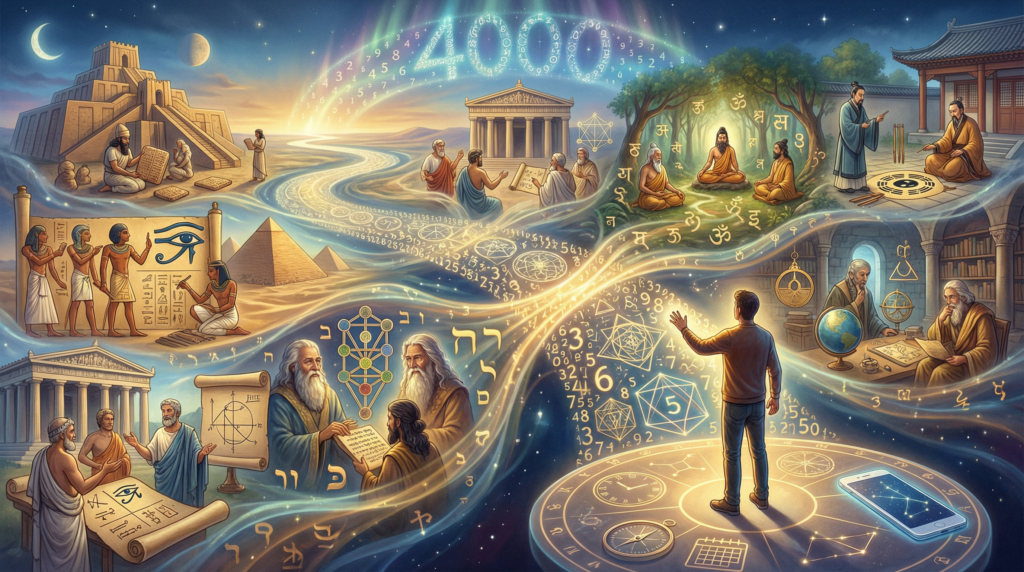
Today I want to take you on a journey through the history of numerology — from its ancient roots across multiple civilizations to the system you're using right now.
Because understanding where numerology came from makes everything it tells you feel even more profound.
And because you deserve to know the full weight of what you've stumbled into.
How Old Is Numerology? Older Than You Think
Let me give you a number before we begin.
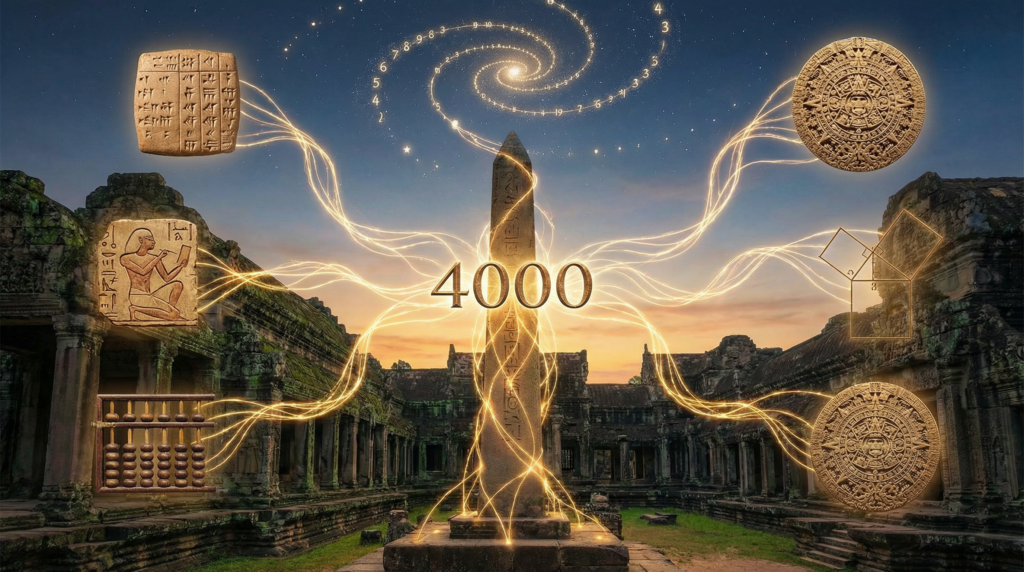
Four thousand.
That is the minimum number of years that numerology has been practiced in recorded human history.
Four thousand years.
For context: that is older than most of the world's major religions.
Older than the Roman Empire.
Older than the construction of most of the ancient wonders of the world.
Older than virtually every modern system of self-understanding — psychology, psychiatry, personality theory, all of it.
When I first started studying numerology seriously, I assumed it was relatively modern — something that emerged in the 20th century alongside astrology columns and crystal shops and the general cultural interest in metaphysical things.
I was off by approximately 3,500 years.
That discovery changed how I understood everything I was studying.
Because here is what the age of numerology tells you:
Systems that don't work don't survive for four thousand years.
Practices that don't resonate with human experience don't get independently discovered by cultures with no contact with each other.
The history of numerology is not a single linear story — it is a web of parallel discoveries, a constellation of independent arrivals at the same profound truth, spread across thousands of years and thousands of miles.
And every thread of that web leads to the same place.
Numbers carry meaning.
They always have.
The Ancient Roots — Where Numerology Began

If you send in HONEST FEEDBACK of Sephora products, they'll send them for FREE! See how much you can get 👇
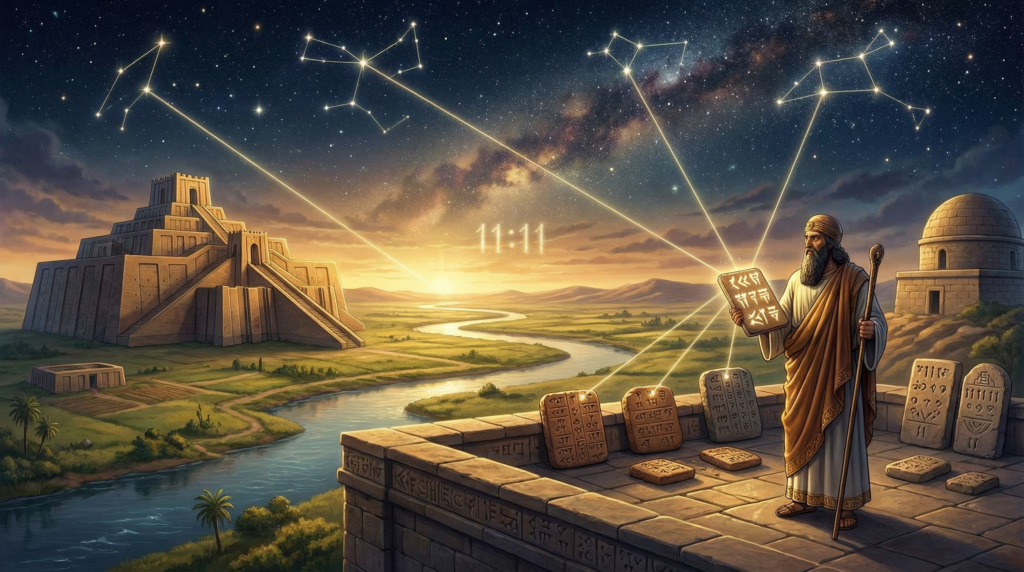
Numerology In Ancient Babylon And Mesopotamia
The earliest recorded use of numerical systems for spiritual and divinatory purposes comes from ancient Babylon and Mesopotamia — the fertile crescent between the Tigris and Euphrates rivers in what is now Iraq.
We are talking about approximately 2000 BCE.
Possibly earlier.
The Babylonians were among the first civilization to develop the idea that numbers carried meaning beyond their mathematical function — that they were connected to cosmic forces, divine will, and the hidden patterns governing human destiny.
They used numerical systems to interpret dreams, to understand the relationship between celestial movements and earthly events, and to seek guidance about the future.
Their astronomical observations were among the most sophisticated in the ancient world — and their numerological thinking was inseparable from those observations.
Numbers were the bridge between the heavens and the earth.
Between the divine and the human.
Between the patterns visible in the sky and the patterns playing out in a single human life.
I find it endlessly fascinating that the same civilization that gave us some of the earliest astronomical records also gave us some of the earliest numerological ones.
They understood, thousands of years before modern science, that the universe operates through patterns.
And they understood that numbers are how those patterns speak.
When you glance at your phone and see 11:11, and feel that unmistakable sense that something is trying to get your attention — you are participating in a tradition of pattern recognition that stretches back to ancient Babylon.
You are asking the same question those ancient scholars asked.
What does this mean?
And what is it trying to tell me?
Numerology In Ancient Egypt
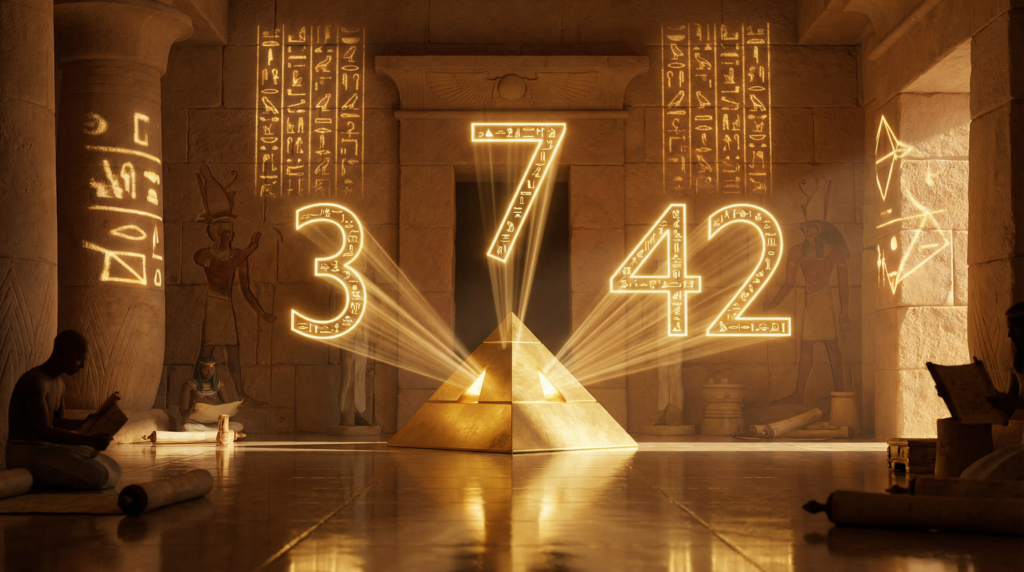
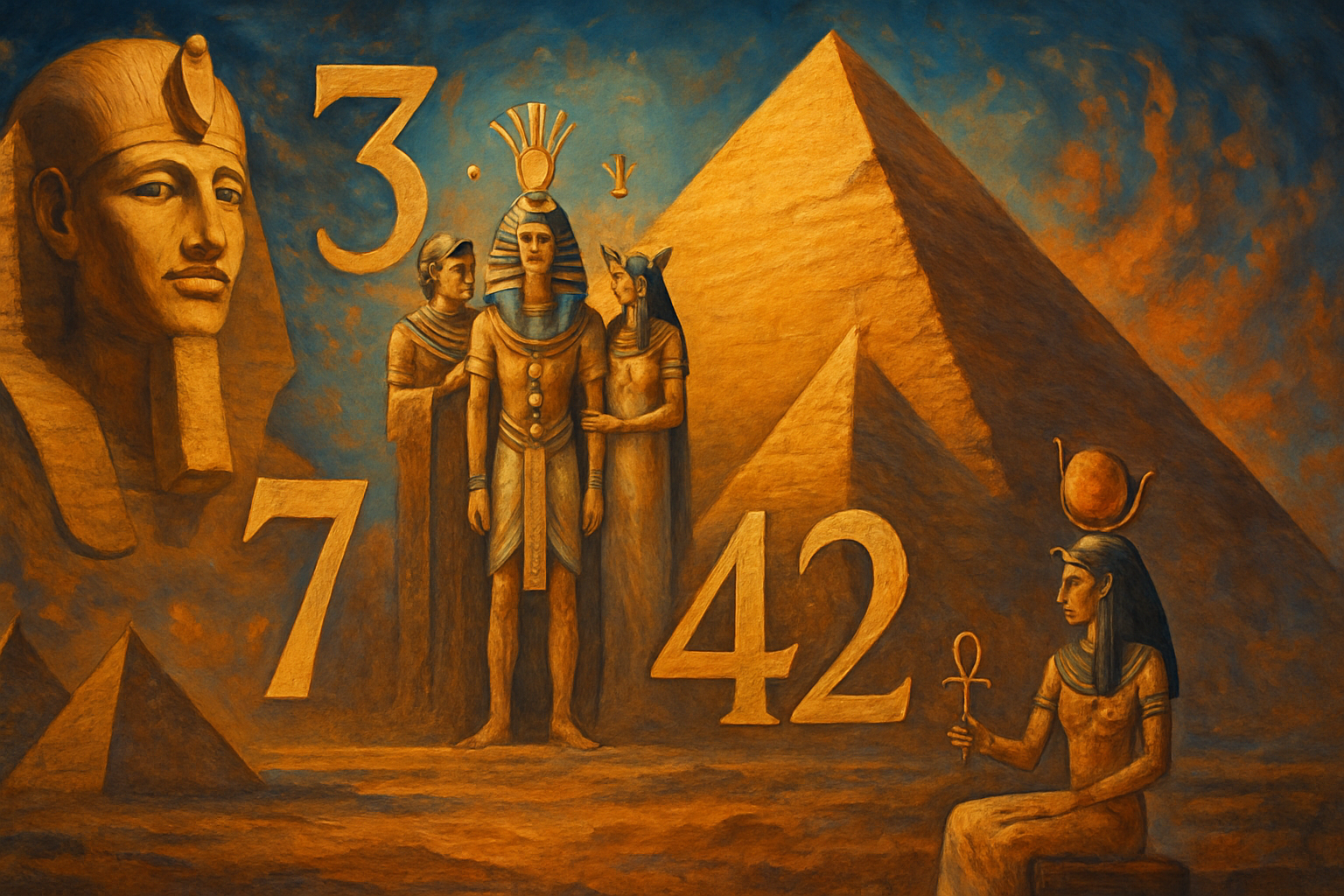
Ancient Egypt developed one of the most sophisticated numerical and spiritual systems in the ancient world — and numbers held a sacred significance in Egyptian culture that permeated everything from architecture to religious ritual to the understanding of the soul's journey after death.
The number 3 represented completeness and divine perfection — seen in the great triads of Egyptian deities, the groupings of three that appeared throughout their theology and their art.
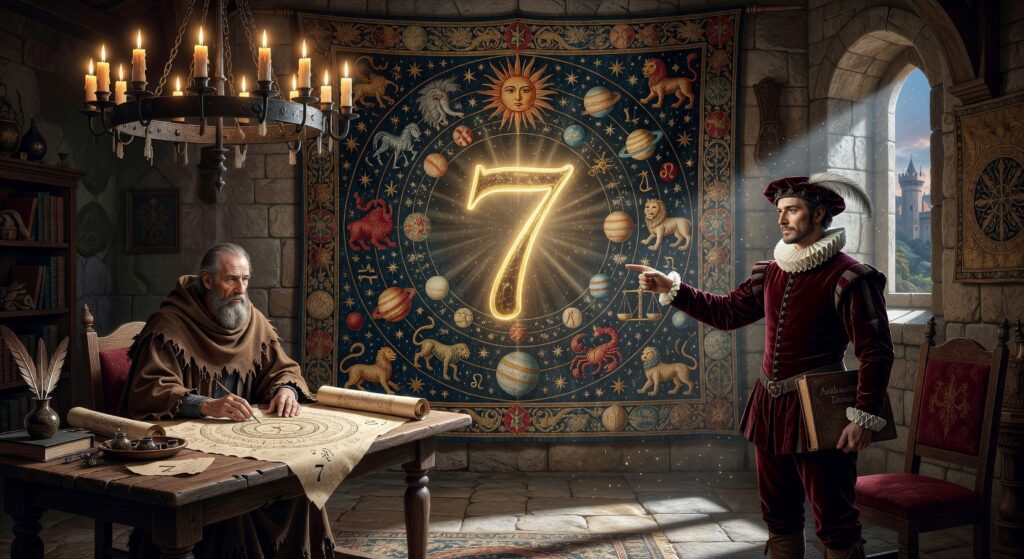
The number 7 was considered the number of spiritual completion and divine order — a belief that has persisted through thousands of years of numerological tradition and remains central to the system I work with today.
The number 42 held profound significance in the afterlife tradition — there were 42 laws of Ma'at, the goddess of truth and justice, that a soul was judged against after death.
The construction of the pyramids themselves reflects a depth of understanding of sacred geometry and numerical relationships that goes far beyond practical engineering.
The Great Pyramid of Giza encodes mathematical constants — including pi and the golden ratio — with a precision that continues to astonish modern mathematicians.
These were not accidents.
These were the deliberate expressions of a civilization that understood numbers as sacred — as the language through which the divine order of the universe expressed itself.
Every time I teach about the number 7 being the most spiritually charged digit in numerology, I think about the fact that ancient Egyptian priests understood this thousands of years ago.
The wisdom in the system I work with every day has roots that go all the way back to the banks of the Nile.
That never stops being extraordinary to me.


I found a way you can get $750 store credit to Amazon every so often so if you could use some breathing room, try this.
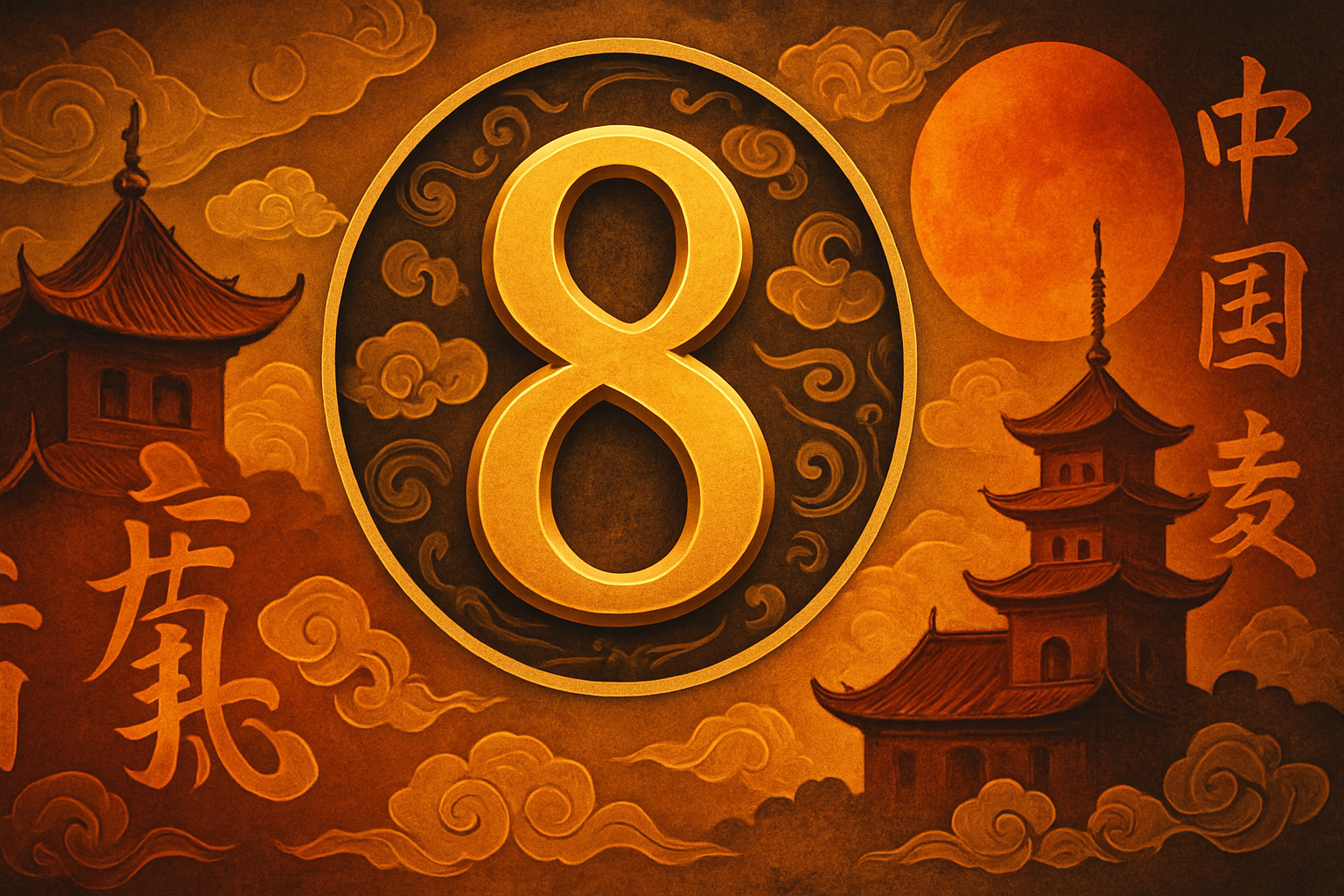
Numerology In Ancient China
Chinese numerology developed entirely independently from Western systems — and it has its own rich, distinct, extraordinarily deep tradition that continues to influence Chinese culture in profound and practical ways today.
In Chinese numerology, numbers carry specific energetic associations that are embedded in daily life at every level.
Business decisions, wedding dates, the floors of buildings, the prices of products, the timing of major life events — all of these are influenced by numerical considerations in Chinese culture in ways that most Westerners find surprising until they understand the depth of the tradition behind them.
The number 8 is considered the luckiest number in Chinese culture — associated with prosperity, abundance, and good fortune.
The 2008 Beijing Olympics opening ceremony began at 8:08 PM on August 8th, 2008.
8/8/08 at 8:08.
That was not a coincidence.
That was a civilization expressing its understanding of numerical energy on the world's largest stage.
And here is what stops me in my tracks every time I think about it:
In Western numerology — in the Pythagorean system that developed completely independently, on the other side of the world, with no contact with Chinese culture — the number 8 is also the number of abundance, prosperity, and material success.
The same number.
The same meaning.
Two traditions with no connection to each other, arriving at the same truth.
That is not coincidence.
That is a truth so fundamental that humanity kept discovering it independently, in different languages, on different continents, across thousands of years.
Numerology In Ancient India — The Vedic Tradition
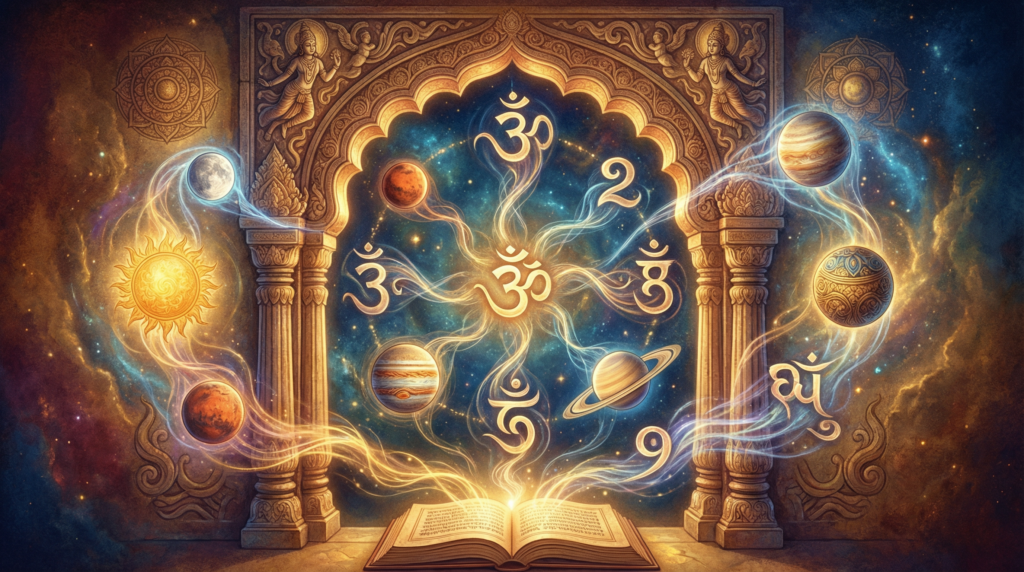
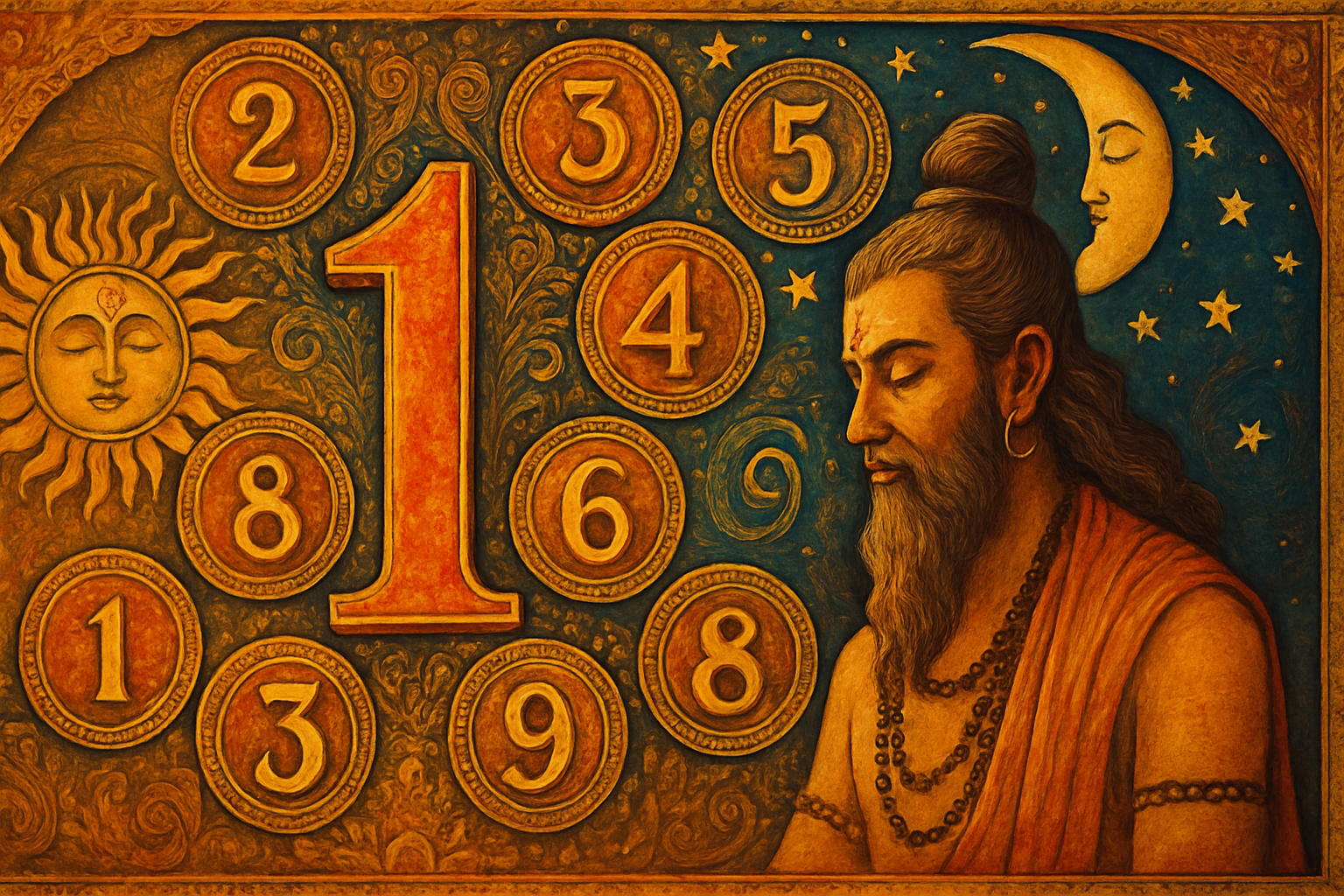
Vedic numerology — also called Indian numerology — is one of the oldest and most sophisticated numerological systems in existence, with roots in the ancient Vedic texts that date back thousands of years.
In the Vedic tradition, numbers are understood not just as symbols but as vibrations — each carrying a specific frequency that influences the soul's journey not just through this lifetime but through multiple lifetimes.
The Vedic system is closely connected to Vedic astrology, known as Jyotish, and to the broader understanding of karma, dharma, and the soul's evolution across incarnations.
Each number from 1 to 9 is associated with a specific planetary energy — creating a bridge between the numerical and the celestial that mirrors the Babylonian tradition on the other side of the world.
Vedic numerology approaches numbers with a reverence and a depth that I find genuinely moving.
The understanding that numbers are not just symbols but living vibrations — energies that you can feel as much as understand — completely changed how I taught numerology to others when I first encountered it.
It shifted my approach from explaining what numbers mean to helping people feel what numbers mean.
That shift made everything I do richer.
Pythagoras — The Father of Western Numerology
If you're down to leave review videos of the products AFTER you receive them, you can get these gift cards all the time!
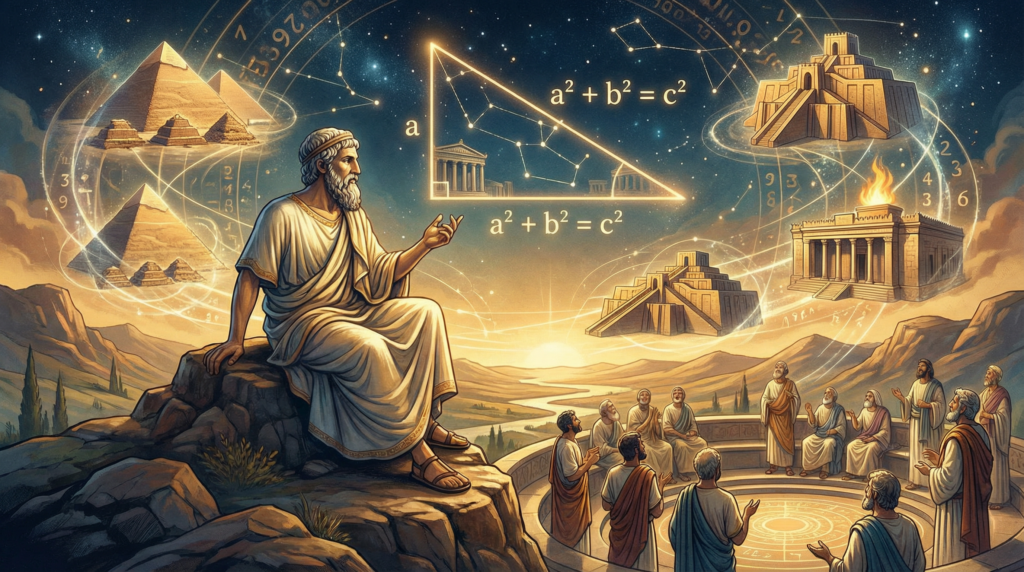
Who Was Pythagoras Really?
Most people know Pythagoras from the theorem that bears his name.
The one about right triangles.
The one I wrote on whiteboards for years.
a² + b² = c².
But Pythagoras was so much more than a mathematician.
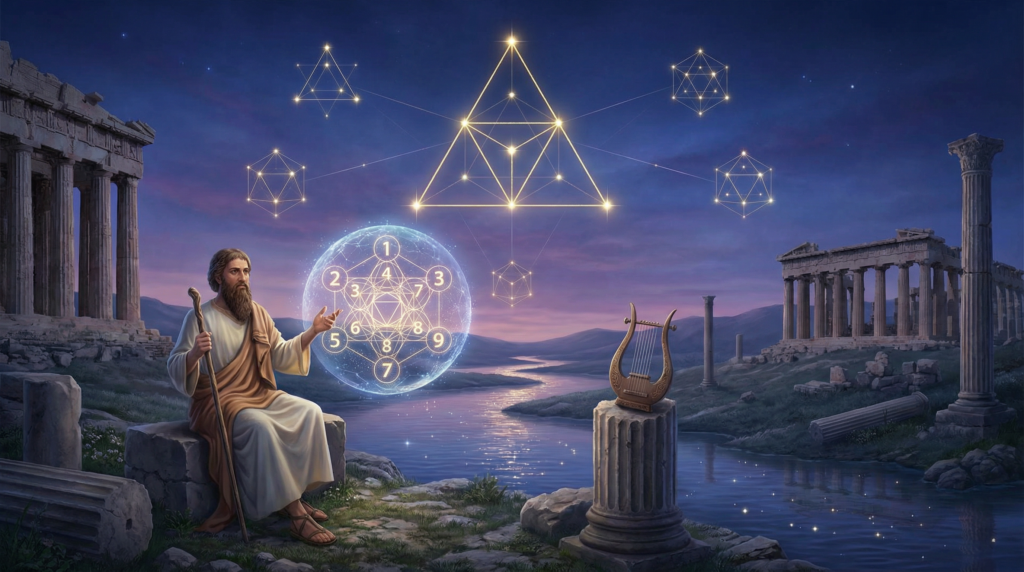
He was a philosopher, a mystic, a spiritual teacher, and the founder of a school of thought that placed numbers at the absolute center of all understanding — not just mathematical understanding, but spiritual, philosophical, and cosmological understanding.
Born around 570 BCE on the Greek island of Samos, Pythagoras spent decades traveling — to Egypt, where he studied with the priests and absorbed their understanding of sacred geometry and numerical significance; to Babylon, where he encountered the ancient Chaldean tradition of numerical divination; to Persia, where he studied with the Zoroastrian magi.
He was, in the most literal sense, a student of the world's ancient wisdom traditions.
And then he came home and synthesized everything he had learned into a comprehensive philosophical system that would shape Western thought for the next two and a half thousand years.
I have told the Pythagorean theorem to hundreds of students over the years.
And every single time, I was teaching them the work of a man who believed that numbers were the language of the soul.
I just didn't know it yet.
When I finally made that connection — sitting in my classroom after school with a book about the real Pythagoras — I laughed for about five minutes straight.
Of course.
Of course it was Pythagoras.
Of course the man whose theorem I had been teaching was also the father of the system that would eventually change my life.
The universe has such a sense of humor.
What Pythagoras Believed About Numbers
Pythagoras's most famous declaration was simple and radical:
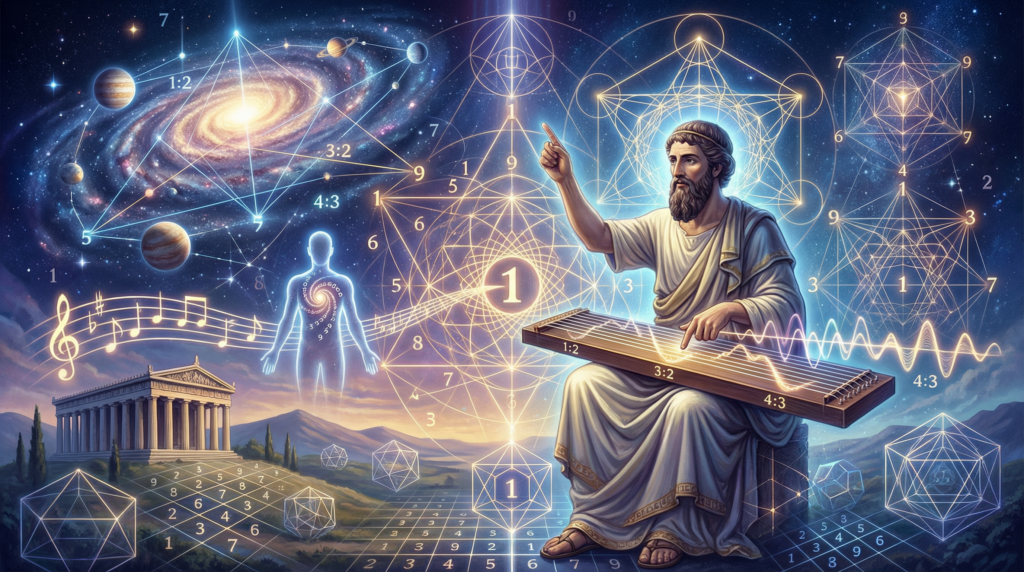
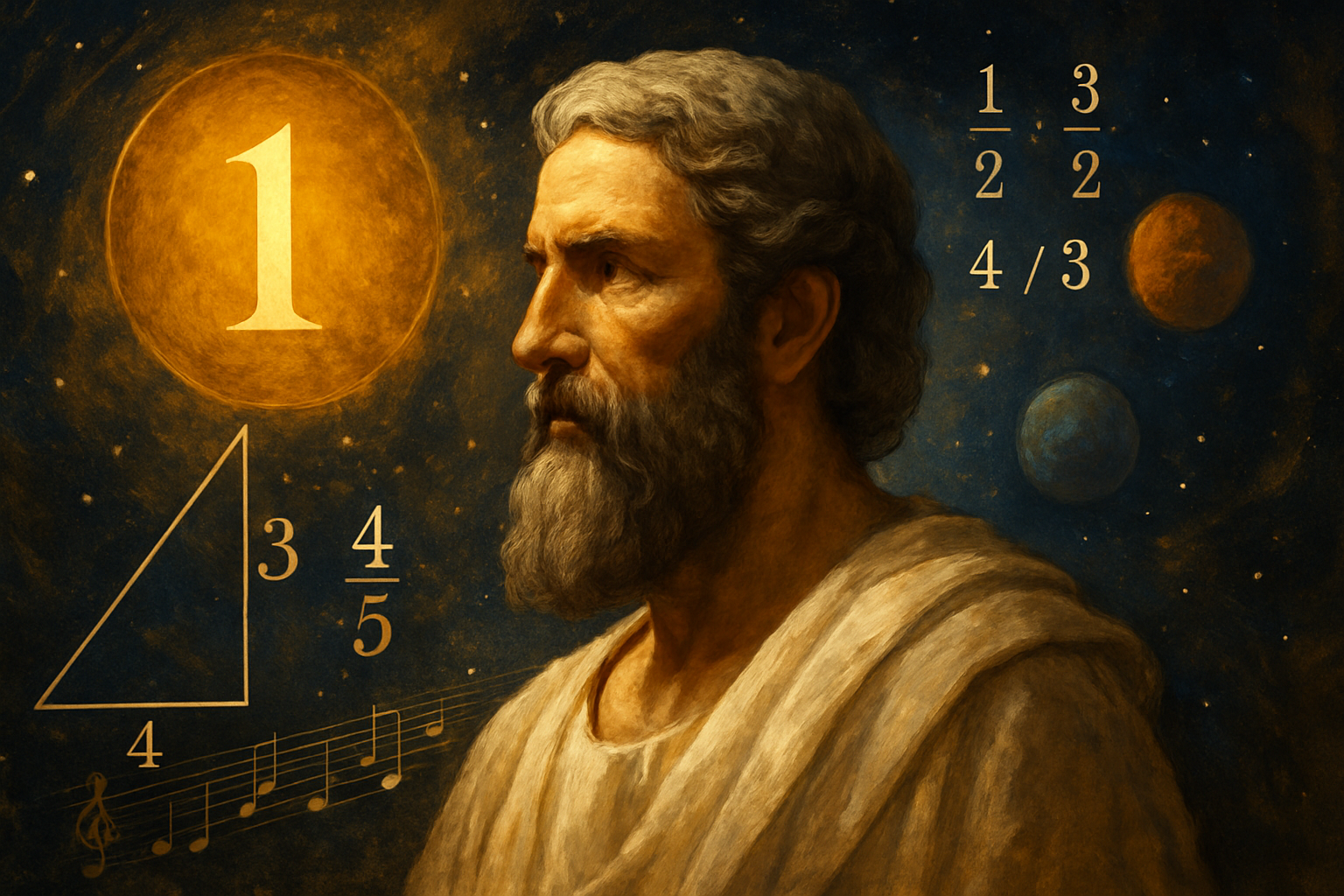
"All is number."
Everything in the universe — from the movement of planets to the nature of the human soul to the harmony of music — could be understood through numerical relationships.
This was not a metaphor for Pythagoras.
It was a literal description of reality.
He arrived at this conviction through observation.
He noticed that musical harmony was governed by mathematical ratios — that the most beautiful, resonant sounds were produced by specific numerical relationships between string lengths.
A string half the length of another produces a note exactly one octave higher.
The ratio 3:2 produces a perfect fifth.
The ratio 4:3 produces a perfect fourth.
Beauty, harmony, and truth were all expressions of numerical order.
From this observable, measurable, reproducible fact, Pythagoras extrapolated outward.
If music — the most emotional, the most human, the most seemingly subjective of all art forms — was governed by mathematical ratios, then perhaps everything was.
Perhaps the universe itself was a kind of music.
Perhaps the planets moved in harmonious ratios.
Perhaps the human soul had a numerical signature.
Perhaps numbers were not just tools for counting things but the fundamental language through which reality expressed itself.
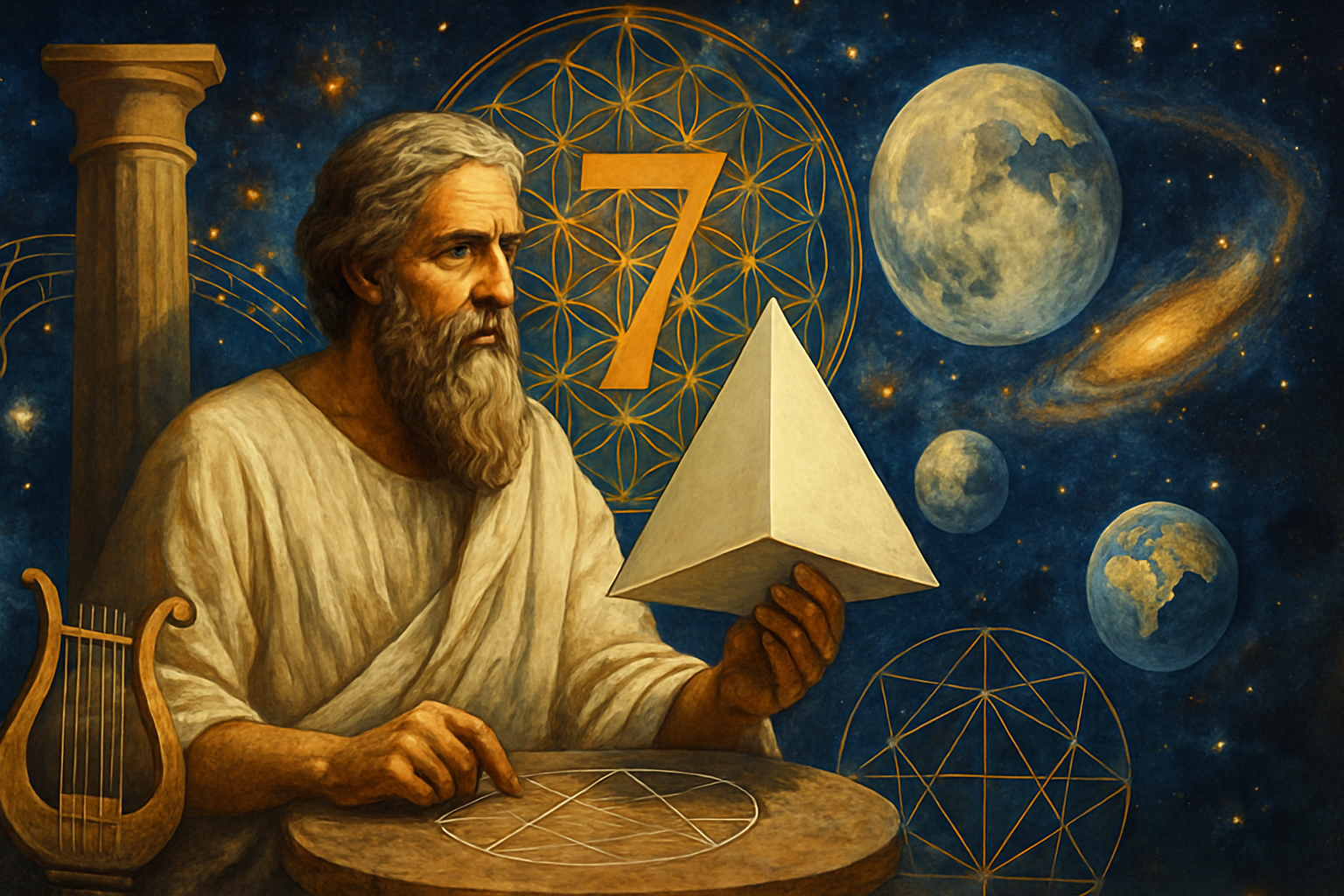
He assigned specific qualities and meanings to each number from 1 to 9 — creating the foundation of what would become Western numerology.
If you send in HONEST FEEDBACK of Sephora products, they'll send them for FREE! See how much you can get 👇
One: the origin, the beginning, the unity from which all else emerges.
Two: duality, balance, the first division.
Three: harmony, the synthesis of one and two.
Four: stability, the foundation, the earth.
Five: change, the midpoint, the bridge.
Six: love, harmony, the heart.
Seven: spiritual perfection, the seeker, the mystic.
Eight: abundance, power, the infinite cycle.
Nine: completion, wisdom, the end that contains all beginnings.
These meanings — developed by a Greek philosopher on the island of Samos in the sixth century BCE — are the same meanings I work with in every reading I do today.
That continuity moves me every single time I think about it.
The Pythagorean School And Its Legacy
Pythagoras founded a school in Croton, in what is now southern Italy, where students studied mathematics, music, astronomy, and philosophy as interconnected disciplines — not as separate subjects but as different windows onto the same fundamental truth.
The school was also a spiritual community.
Students lived by a set of principles that reflected Pythagoras's belief that numbers and harmony were the path to understanding the divine.
They believed in the transmigration of souls — that the soul journeys through multiple lifetimes, accumulating wisdom.
They believed that the study of numbers was a form of spiritual practice — that understanding numerical relationships was a way of understanding the mind of the divine.
The Pythagorean school's influence spread throughout the ancient Greek world and beyond — shaping the thinking of Plato, who incorporated Pythagorean numerical philosophy into his own work, and through Plato, influencing the entire trajectory of Western philosophy.
After Pythagoras's death, his followers continued to develop and refine his numerical system.
They kept the tradition alive.
They passed it forward.
And eventually, through a chain of transmission stretching across centuries, it reached the system I work with today.
There's something beautiful about that.
Truth doesn't need its originator to keep it alive.
It keeps itself alive because it keeps being useful, keeps being accurate, keeps resonating with human experience across centuries and millennia.
Kabbalah And The Hebrew Tradition — Gematria
What Is Gematria?
Gematria is the ancient Hebrew system of assigning numerical values to letters — creating a bridge between language and number that reveals hidden layers of meaning in sacred texts.
In the Kabbalistic tradition, every letter of the Hebrew alphabet has a corresponding numerical value.
And the numerical values of words and phrases reveal deeper spiritual meanings that are invisible to the reader who only reads the surface.
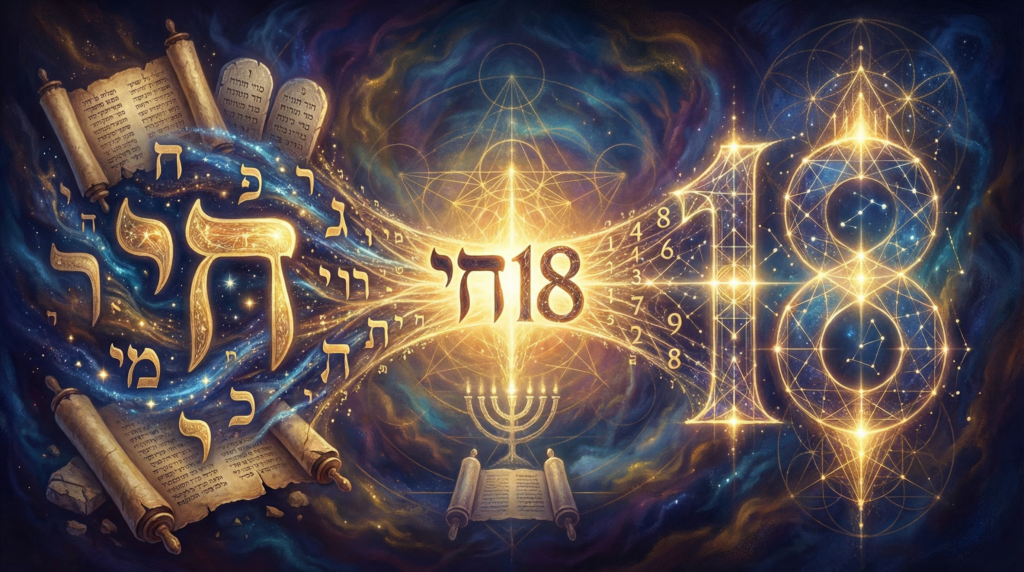
The most famous example: the Hebrew word for life — chai — has a numerical value of 18.
Which is why 18 is considered an especially auspicious number in Jewish tradition.
Why gifts of money in Jewish culture are often given in multiples of 18.
I found a way you can get $750 store credit to Amazon every so often so if you could use some breathing room, try this.
Why the number 18 carries a weight and a significance that goes far beyond its mathematical value.
Gematria was used by Jewish scholars and mystics to interpret the Torah, to understand the nature of God, and to explore the hidden architecture of creation — the idea that the universe was constructed according to numerical principles that could be read in the sacred text if you knew how to look.
Gematria was one of the most mind-expanding things I studied when I was learning the history of numerology.
The idea that language and number are not separate systems but two expressions of the same underlying truth — that words carry numerical vibrations and numbers carry linguistic meaning — felt like a revelation.
As a former math teacher who also loved words, who had always felt the tension between the analytical and the expressive, this felt like coming home.
Kabbalah Numerology And The Tree Of Life
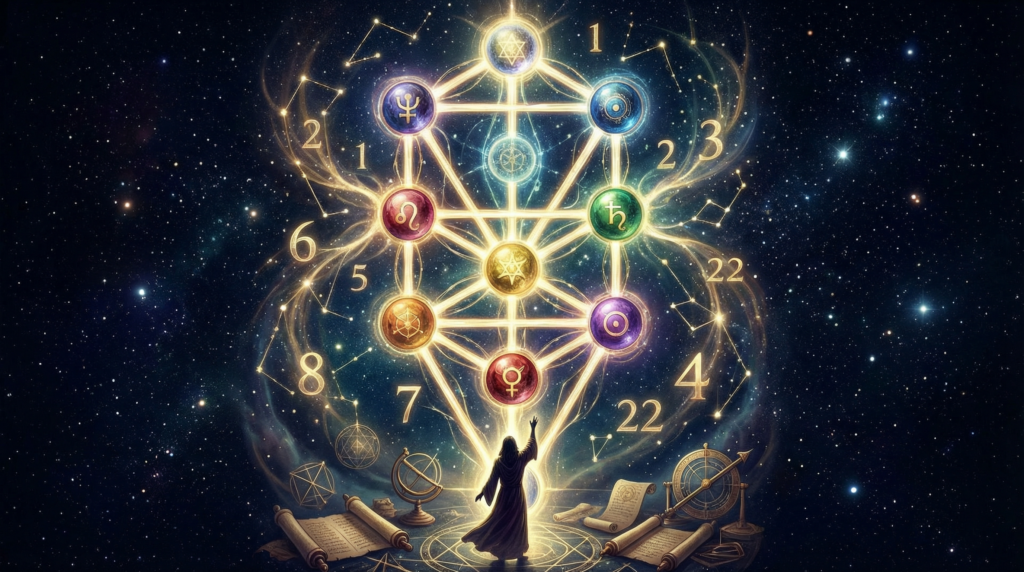
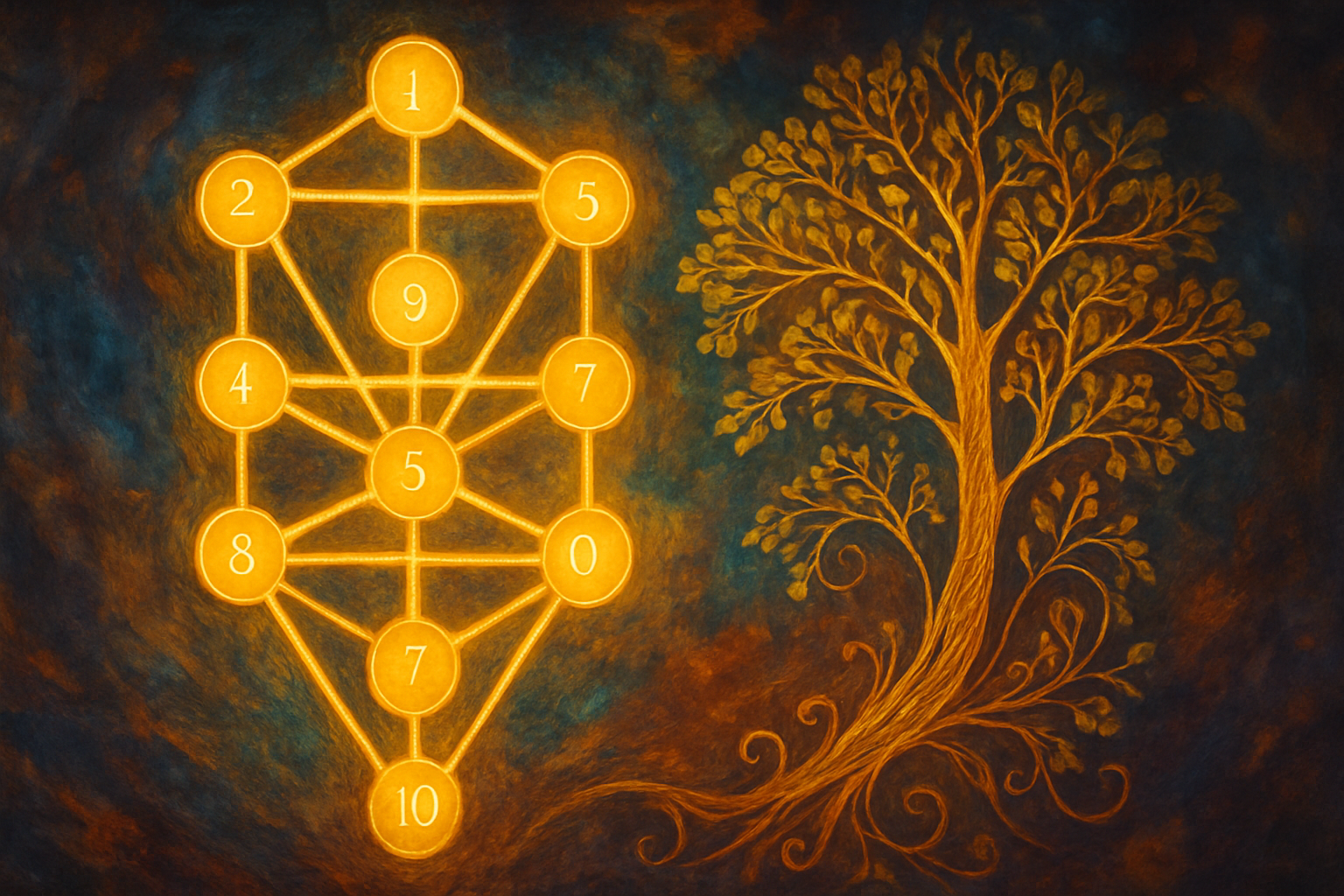
The Kabbalah — the ancient Jewish mystical tradition — uses a system called the Tree of Life to map the structure of creation and the soul's journey through it.
The Tree of Life consists of ten spheres, called Sefirot, connected by 22 paths.
Each sphere and each path is associated with specific numbers, letters, divine qualities, and aspects of the soul's experience.
Together, they create a complete map of creation — from the most abstract divine emanation down to the physical world we inhabit.
Kabbalistic numerology uses these associations to understand the soul's purpose, the nature of divine energy, and the hidden patterns connecting all of creation.
This system influenced not just Jewish mysticism but the entire Western esoteric tradition — including tarot, astrology, alchemy, and modern numerology.
The Tree of Life is one of the most profound and beautiful systems of understanding I have ever encountered.
The Kabbalistic tradition approaches numbers with a reverence that I find deeply moving — the understanding that numbers are not just symbols but actual expressions of divine energy, actual emanations of the creative force that underlies all of existence.
That perspective has profoundly shaped how I approach every reading I do.
When I calculate someone's Life Path Number, I am not just doing arithmetic.
I am touching something ancient.
Numerology Through The Middle Ages And Renaissance
Numerology In Early Christianity
The early Christian church had a complex and fascinating relationship with numerology.
On one hand, the church was often suspicious of divinatory practices — of any system that claimed to reveal hidden knowledge or predict the future.
On the other hand, certain numbers held such profound sacred significance within Christian theology that numerical thinking was completely inseparable from Christian understanding.
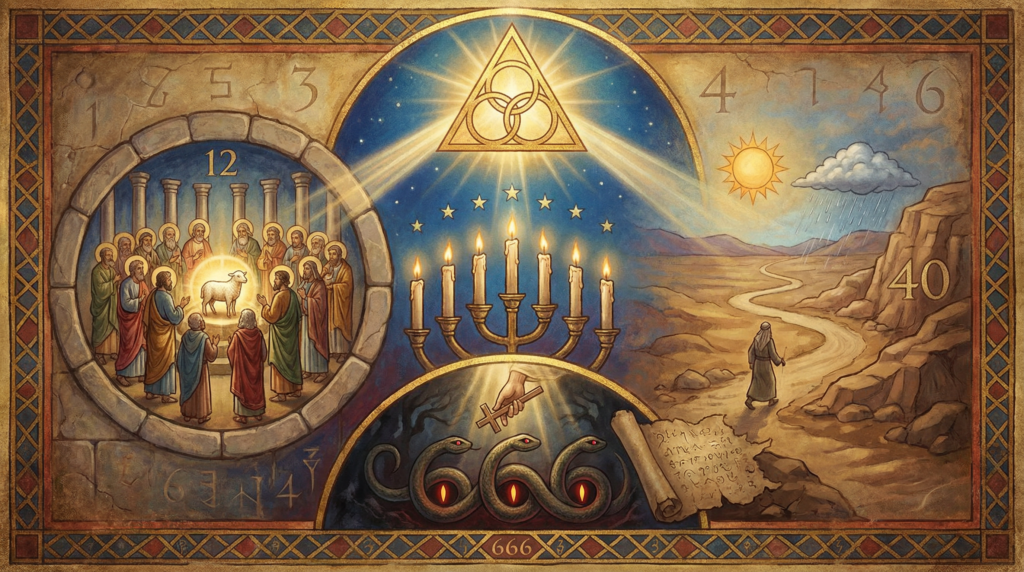
The number 3 represented the Holy Trinity — Father, Son, and Holy Spirit — the foundational mystery of Christian faith.
The number 7 represented divine perfection and completion — seen in the seven days of creation, the seven sacraments, the seven deadly sins, the seven gifts of the Holy Spirit.
If you're down to leave review videos of the products AFTER you receive them, you can get these gift cards all the time!
The number 12 represented divine governance and completeness — twelve apostles, twelve tribes of Israel, twelve gates of the New Jerusalem.
The number 40 represented trial, testing, and transformation — forty days in the desert, forty years in the wilderness, forty days of Lent.
The number 666 carried such profound negative significance that it became the most famous number in Western culture.
Despite official church ambivalence toward numerology as a divinatory practice, numerical thinking was so deeply embedded in Christian theology that it was impossible to separate them.
It's fascinating to me that even within a tradition that was sometimes suspicious of numerology as a practice, the sacred significance of specific numbers was completely accepted and central to the theology.
Numbers carry meaning.
Even institutions that resist that idea end up demonstrating it.
The Renaissance Revival Of Numerological Thinking
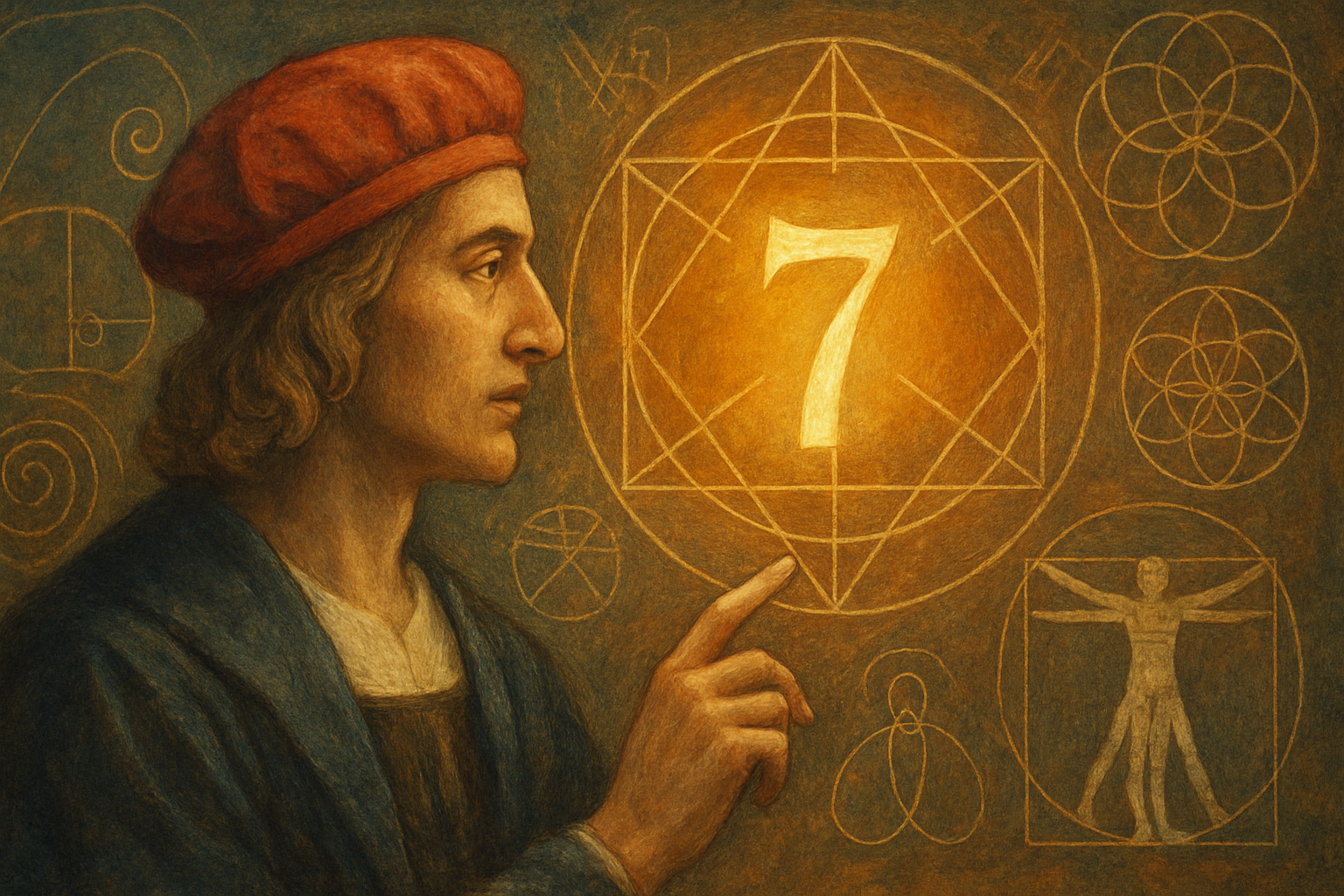
The Renaissance — roughly the 14th through 17th centuries — saw one of the most significant revivals of numerological thinking in Western history.
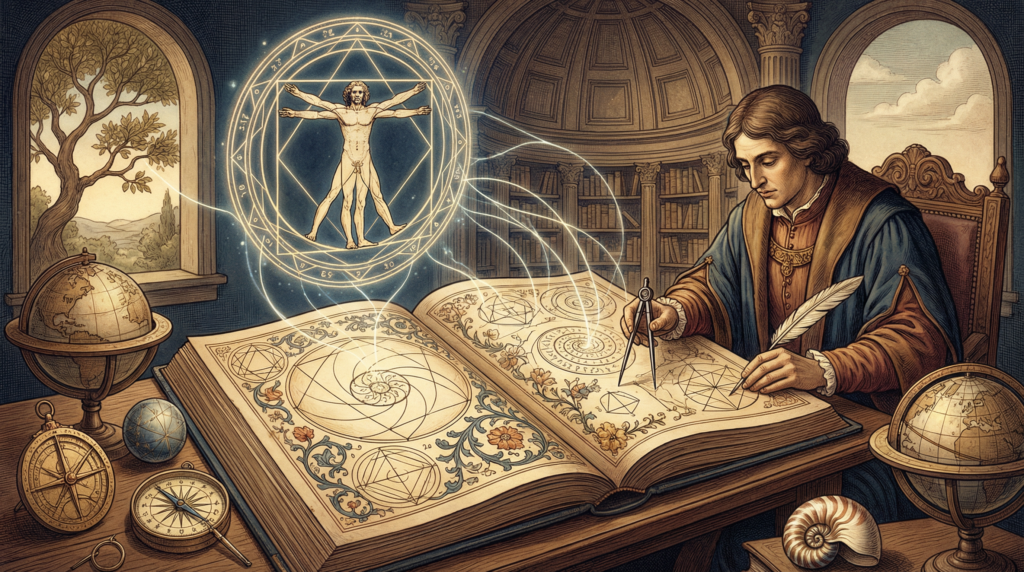
Renaissance scholars rediscovered the works of Pythagoras, Plato, and the Neoplatonists — and with them, the understanding that numbers were the language of the universe.
Figures like Marsilio Ficino — the Florentine philosopher and priest who translated the complete works of Plato into Latin for the first time — and Pico della Mirandola — who synthesized Pythagorean numerology, Kabbalistic Gematria, and Neoplatonic philosophy into a comprehensive esoteric system — brought numerical mysticism back to the center of intellectual life.
This period also saw the flourishing of sacred geometry — the study of the mathematical patterns underlying natural forms, from the spiral of a nautilus shell to the branching of a tree to the proportions of the human body.
Sacred geometry drew heavily on numerological principles — the understanding that specific numbers and ratios carried specific qualities, and that the presence of those ratios in natural forms was not accidental but expressive of the divine order underlying creation.
The Renaissance fascinates me because it was a period when the most brilliant minds of the age were completely unashamed about combining rigorous intellectual inquiry with deep spiritual exploration.
They didn't see those things as opposites.
They saw them as two paths up the same mountain.
Neither do I.
If you're down to leave review videos of the products AFTER you receive them, you can get these gift cards all the time!
The Chaldean System — An Alternative Ancient Tradition
Before we move into the modern era, I want to introduce you to a system that often gets overlooked in popular discussions of numerology — and that deserves far more attention than it typically receives.
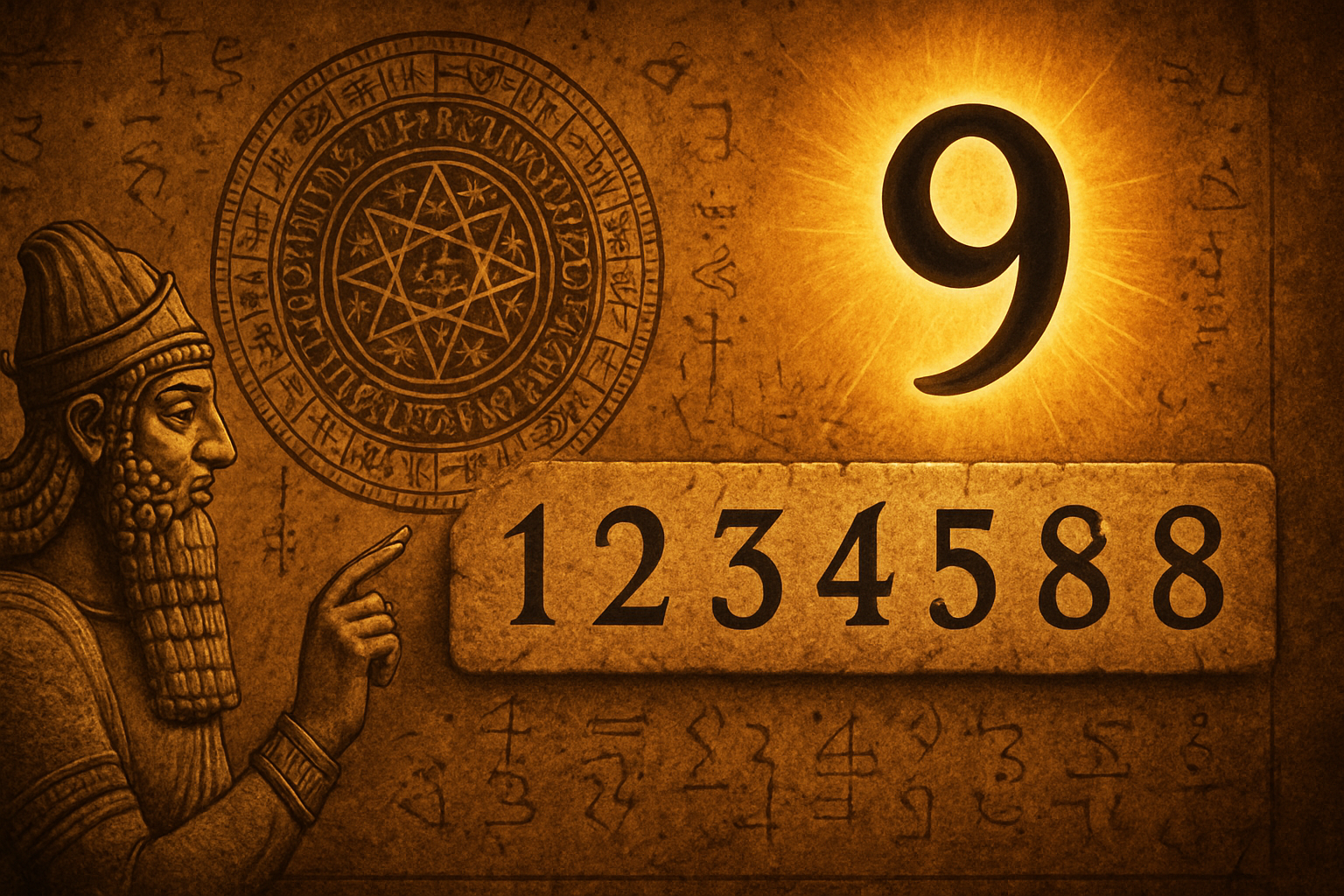
The Chaldean numerology system is one of the oldest in existence.
It predates the Pythagorean system and originates in ancient Babylon — in the same Chaldean civilization that gave us some of the earliest astronomical and numerological records in human history.
Unlike the Pythagorean system, which assigns numbers to letters in sequential order — A=1, B=2, C=3, and so on — the Chaldean system assigns numbers based on the vibrational energy of each letter.
The assignment is not sequential but energetic — based on the Chaldean understanding of how each letter vibrates and what numerical frequency it naturally carries.
In the Chaldean system, numbers 1 through 8 are used for letter assignments.
Nine is considered sacred — the number of the divine — and is not assigned to any letter.
It exists above the system, as a kind of spiritual constant that underlies everything.
Many numerologists consider the Chaldean system to be more spiritually precise than the Pythagorean system — closer to the original vibrational understanding of numbers that the ancient Babylonians developed.
When I first encountered the Chaldean system, I was struck by how different it felt from the Pythagorean system I'd been working with.
More ancient.
More mystical.
With a different quality of depth — like the difference between a river and a well.
I spent months studying both systems side by side.
Understanding both made me a significantly better numerologist.
And it deepened my appreciation for the richness of the tradition I was working within — the understanding that numerology is not a single system but a family of related systems, all pointing toward the same truth from slightly different angles.

Modern Numerology — The 20th Century And Beyond
The Birth Of Modern Western Numerology
The late 19th and early 20th centuries saw a significant revival of interest in esoteric and metaphysical traditions — a cultural moment when the boundaries between science, philosophy, and spirituality were being actively renegotiated.
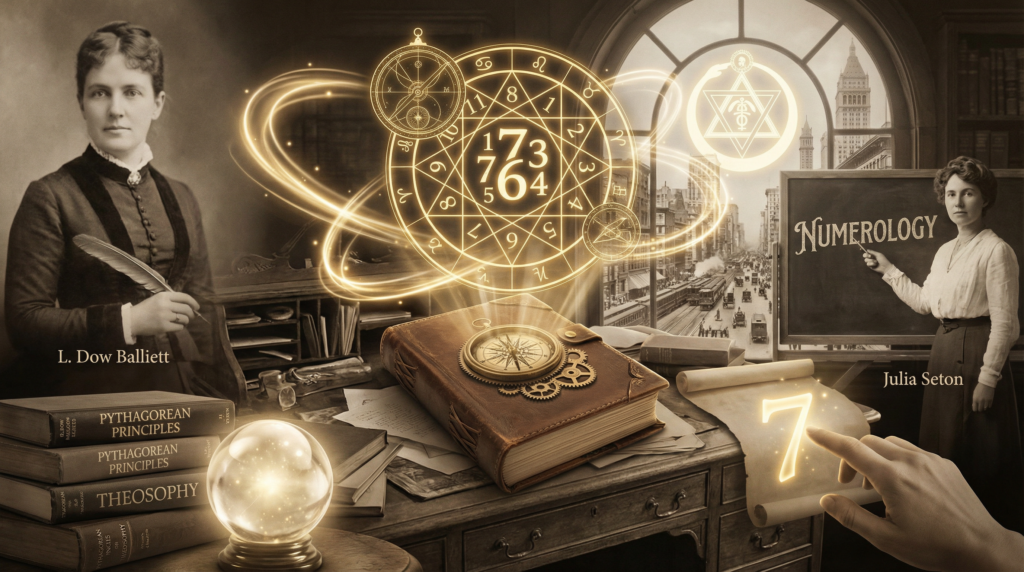
Key figures in the modern numerology revival include L. Dow Balliett, an American author who published some of the first modern books on numerology in the early 1900s, synthesizing Pythagorean principles with her own insights and making the system accessible to a general audience for the first time.
Dr. Julia Seton, a contemporary of Balliett's, is credited with coining the term "numerology" itself — giving the ancient practice a modern name that would carry it into the 20th century.
The Theosophical Society — founded by Helena Blavatsky in 1875 — played a significant role in this revival, synthesizing Eastern and Western spiritual traditions and creating a cultural context in which ancient wisdom systems like numerology could be taken seriously by educated, intellectually curious people.
Through the 20th century, numerology became increasingly accessible — moving from the domain of scholars and mystics into the hands of ordinary people seeking self-understanding, purpose, and guidance.
I find it meaningful that numerology became widely accessible in the 20th century — right when the world was changing faster than it ever had before, right when traditional sources of meaning and identity were being disrupted, right when people were searching for something ancient and true to hold onto.
The timing feels intentional.
It usually does.

If you send in HONEST FEEDBACK of Sephora products, they'll send them for FREE! See how much you can get 👇
Numerology In The Digital Age
And then came the internet.
And everything changed again.
The digital age has transformed numerology's reach in ways that would have been completely unimaginable to Pythagoras, to the ancient Babylonian priests, to the Kabbalistic mystics of medieval Spain.
Millions of people now have access to numerological knowledge that was once available only to scholars, to mystics, to those lucky enough to find a teacher who had found a teacher who had found a teacher stretching back through the centuries.
The rise of angel numbers as a cultural phenomenon — the widespread awareness of 111, 222, 333, 444, and other repeating sequences — represents a genuinely new chapter in numerology's long history.
For the first time, numerological awareness is not confined to people who have studied the system.
It is spreading organically, person to person, through the simple shared experience of noticing numbers and wondering what they mean.
Social media has created communities of millions of people sharing their numerological experiences, discoveries, and insights in real time — a global conversation about the language of numbers that has never existed at this scale before.
When I think about the fact that I can share numerological knowledge with people all over the world — people who might never have encountered it otherwise, people who are asking the same questions the ancient Babylonians asked and finding the same answers — I feel genuinely moved.
The ancient priests who first understood that numbers carried meaning could not have imagined this.
But I think they would have loved it.
Why The History Of Numerology Matters For You Right Now
I want to bring this journey home to something personal.
Because history is only interesting if it's relevant.
And the history of numerology is deeply, specifically, personally relevant to you — right now, today, in whatever season of life you're currently navigating.
Here is what the history tells you:
The questions you are asking are not new.
The feeling that there is something beneath the surface of your life that you haven't fully understood yet — the sense that your patterns mean something, that your gifts are pointing somewhere, that the numbers you keep seeing are not random — that feeling is ancient.
It is the most human feeling there is.
And the answers that numerology offers are not new either.
They are four thousand years old.
They have been tested against human experience across dozens of cultures, hundreds of generations, thousands of years.
They have survived the fall of empires, the rise of religions, the scientific revolution, the digital age.
They have survived because they work.
Every reading I do, I am aware that I am working with a system that has been refined by some of the greatest minds in human history.
Ancient Babylonian priests.
Egyptian scholars.
Greek philosophers.
Hebrew mystics.
Indian sages.
Chinese scholars.
I found a way you can get $750 store credit to Amazon every so often so if you could use some breathing room, try this.
Renaissance thinkers.
All of them working on the same fundamental question.
What do the numbers mean?
And what are they trying to tell us?
You didn't stumble onto numerology by accident.
You found it because you're asking the same questions humans have always asked.
And because the answers that have served humanity for thousands of years are ready to serve you too.
The Common Thread — What Every Tradition Agrees On
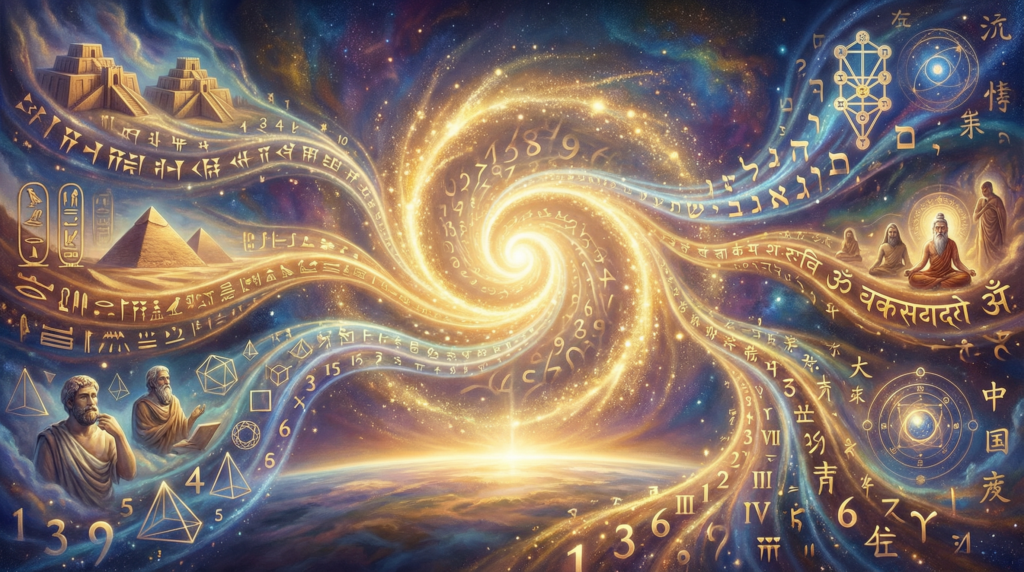
After this journey through four thousand years of numerological history — through Babylon and Egypt, through Pythagoras and the Kabbalah, through the Renaissance and the digital age — I want to leave you with the insight that moves me most.
Despite their differences in method, in language, in cultural context, in the specific systems they developed — every numerological tradition in human history has agreed on the same fundamental truths.
Numbers carry meaning beyond their mathematical function.
The numbers connected to a person's birth and name reveal something true and specific about their soul.
Understanding your numbers leads to greater self-knowledge, better decisions, and a more aligned life.
The universe communicates through patterns — and numbers are the most universal pattern language available.
Ancient Babylonians.
Egyptian priests.
Greek philosophers.
Hebrew mystics.
Indian sages.
Chinese scholars.
All of them, independently, arrived at the same place.
That kind of convergence doesn't happen by accident.
It doesn't happen through coincidence or cultural contamination or wishful thinking.
It happens because something is genuinely, fundamentally, irreducibly true.
And that truth has been waiting for you.
Conclusion — You Are Part Of A 4,000-Year-Old Conversation
You came here to learn about the history of numerology.
And I hope you're leaving with something more than historical facts.
I hope you're leaving with a sense of the weight of what you've stumbled into.
The questions you are asking right now — about purpose, about patterns, about why you are the way you are and what you're here to do — are the same questions humans have been asking for four thousand years.
And the answers that numerology offers are not new.
They are ancient.
Tested.
Refined.
Passed down through an unbroken chain of human wisdom stretching back to the earliest civilizations — through Babylonian priests and Egyptian scholars and Greek philosophers and Hebrew mystics and Indian sages and Renaissance thinkers and 20th century pioneers and now, here, to you.
If you're down to leave review videos of the products AFTER you receive them, you can get these gift cards all the time!
When I discovered the history of numerology, something shifted in how I understood my own work.
I wasn't just a former math teacher who had found an interesting spiritual practice.
I was part of a tradition that stretched back thousands of years.
A tradition that included some of the greatest minds in human history.
All of them working on the same fundamental question.
All of them arriving at the same answer.
I feel that weight every time I do a reading.
And I feel it every time someone finds their way to numerology for the first time — because I know they're not just discovering something new.
They're coming home to something ancient.
Something that has been waiting for them.
Something that has been waiting for you.
You are now part of this conversation.
A conversation that began four thousand years ago and has never stopped.
And the wisdom that has guided humanity across all of that time is available to you right now.
Your FREE Numerology Reading connects you to thousands of years of human wisdom — distilled into a personalized reading that reveals your Life Path Number, your core numbers, and the specific guidance the universe has for you right now.
You are part of an ancient conversation.
Let's find out what it's been trying to tell you.
Frequently Asked Questions About The History Of Numerology
✨ How old is numerology?
Numerology is at least 4,000 years old, with roots in ancient Babylon and Mesopotamia dating back to approximately 2000 BCE or earlier. Some scholars believe its origins may be even older — that the intuition that numbers carry meaning predates written records entirely. It is one of the oldest continuously practiced spiritual systems in human history, predating most of the world's major religions and virtually every modern system of self-understanding.
✨ Who invented numerology?
Numerology was not invented by a single person — it developed independently across multiple ancient civilizations simultaneously. In the Western tradition, Pythagoras is considered the father of modern numerology for his systematic study of the spiritual significance of numbers. However, numerological traditions in Babylon, Egypt, China, India, and ancient Israel all predate or developed parallel to Pythagoras's work — showing that the recognition that numbers carry meaning is not a cultural invention but a universal human discovery.
✨ What is the difference between Pythagorean and Chaldean numerology?
The Pythagorean system assigns numbers to letters in sequential order and is the most widely used system in modern Western numerology. The Chaldean system, which is older and originates in ancient Babylon, assigns numbers based on the vibrational energy of each letter rather than sequential order, and uses only numbers 1-8 for letter assignments — with 9 considered too sacred to assign to any letter. Both systems are valid and widely practiced, and many numerologists study both to deepen their understanding.
✨ Is numerology connected to religion?
Numerology has connections to many religious and spiritual traditions — including ancient Egyptian religion, Pythagorean philosophy, Jewish Kabbalah, early Christianity, Vedic Hinduism, and Chinese spiritual traditions. However, numerology itself is not a religion — it is a spiritual tool that can be used by people of any faith background or none at all. The fact that it appears across so many different religious traditions is itself evidence of its universality.
✨ Did Pythagoras really invent numerology?
Pythagoras is often called the father of Western numerology, but he did not invent it from scratch. He synthesized and systematized numerical wisdom from the ancient traditions he studied during his extensive travels to Egypt, Babylon, and Persia — creating a comprehensive, coherent system from the numerical wisdom of multiple ancient traditions. His contribution was enormous, but it was built on foundations that were already thousands of years old.
✨ How did numerology spread around the world?
Numerology spread through a combination of trade routes, scholarly exchange, conquest, and the natural human tendency to share wisdom that works. The Pythagorean system spread through the Greek world and eventually throughout Europe. Kabbalistic numerology spread through Jewish diaspora communities. Vedic numerology spread with Indian culture and philosophy. Chinese numerology spread throughout East Asia. The digital age has now made all of these traditions accessible to anyone with an internet connection — creating the most widespread access to numerological wisdom in human history.
✨ Why has numerology survived for thousands of years?
The most honest answer is the simplest one: because it works. Systems that don't resonate with human experience don't survive for 4,000 years across multiple cultures. Practices that don't deliver genuine insight don't get independently discovered by civilizations with no contact with each other. The fact that numerology has been continuously practiced and refined across millennia, across cultures, across the most dramatic changes in human civilization — is itself one of the most compelling arguments for its validity. Truth has a way of persisting. And the truth that numbers carry meaning has persisted longer than almost anything else in human history.

Hey! I’m Lily – former math teacher turned numerologist who discovered the life-changing power of numbers through an unexpected gift from a student. Now I help others understand the messages the universe is trying to send them through numerology. Want to know what those repeating numbers you keep seeing mean for YOU? Join my FREE newsletter for spiritual seekers and you’ll find out! ✨